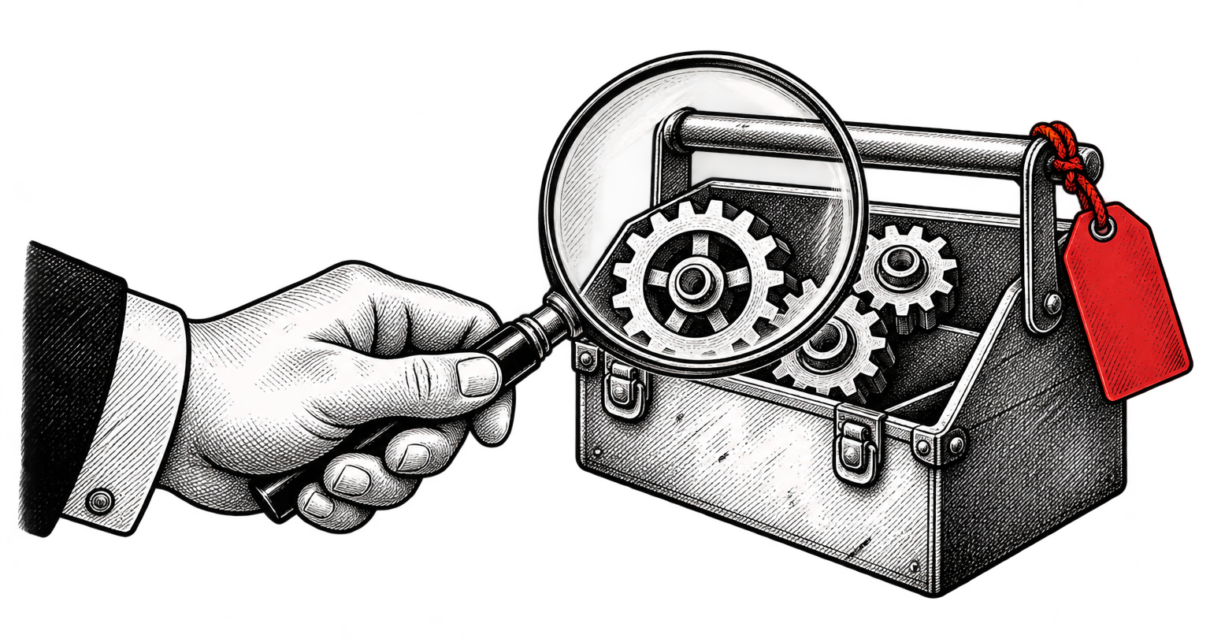
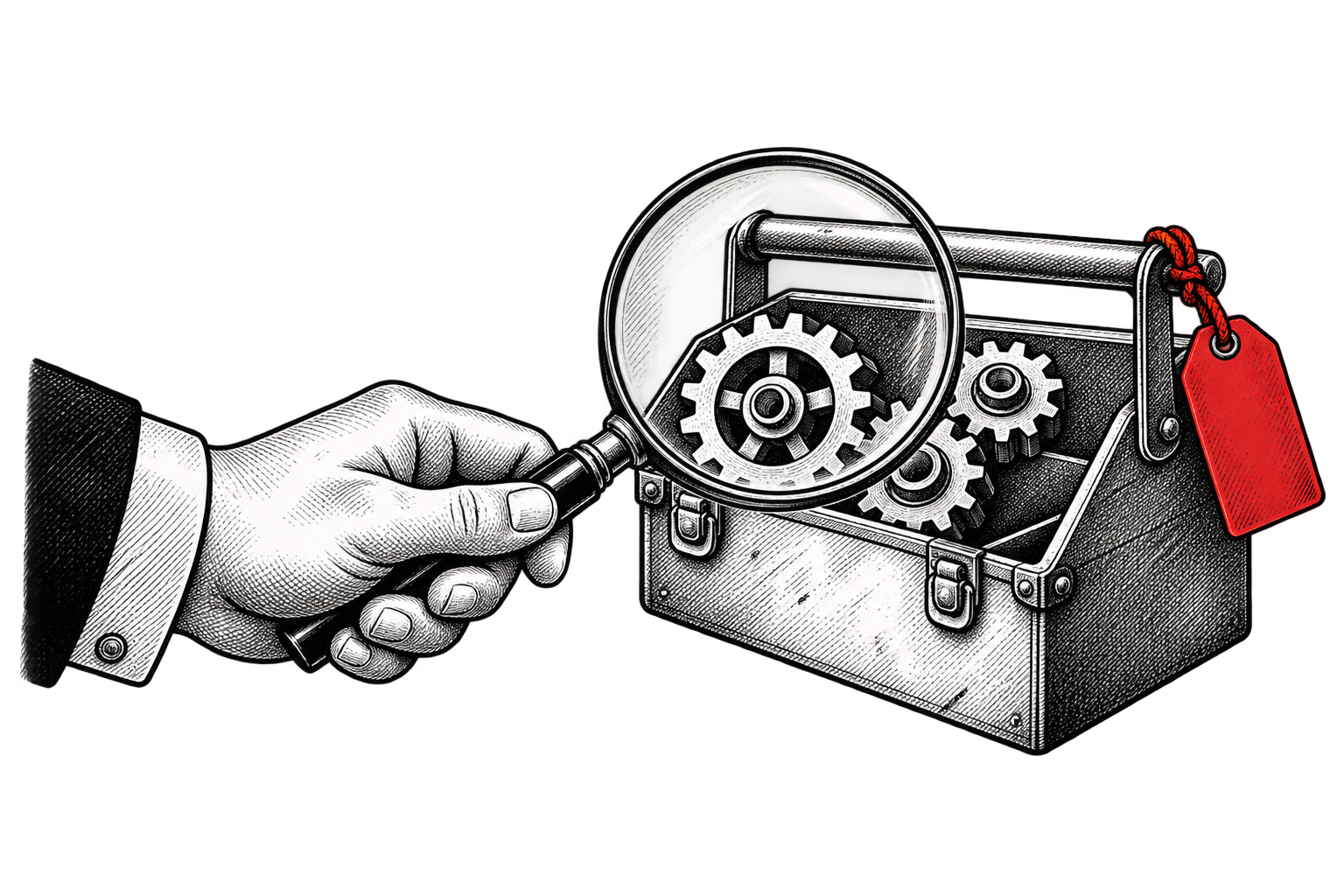
A software demo usually shows a cooperative version of your business. The data is tidy. The permissions are correct. Every customer takes a recognizable path. I want to know what happens when someone enters the wrong information, a colleague changes jobs, or an integration stops working on Friday afternoon.
That is where a promising purchase becomes either a useful tool or another job. My starting point is a short description of the work that needs to improve, written without naming a product.
Buy an outcome you can recognize
“We need better marketing technology” does not help much. “We spend four hours each week preparing an audience, and errors keep putting customers into the wrong campaign” gives you something to investigate. You can measure the current process and judge whether a replacement actually improves it.
Write down the people involved, the inputs, the desired output, and the most expensive failure. Identify the person who will own the process after purchase. If nobody has time to maintain it, include that capacity in the budget before comparing subscriptions.
Then separate requirements from preferences. A required permission control can eliminate a product. A slightly prettier dashboard probably should not. Ask each vendor to show your actual required workflow, including the exception that causes the most trouble today.
Price the whole year
The subscription is only one line. Add implementation, data cleanup, migration, training, integrations, administration, and the period when the old and new tools overlap. Include the time other departments spend helping. An export you cannot use without three afternoons of cleanup is not a frictionless exit.
Request a written estimate at today’s usage and at a plausible higher level. Ask which quantities change the bill, which capabilities require an upgrade, and what happens at renewal. Do not let an attractive entry price stand in for the configuration you actually need.
HubSpot provides a useful illustration of why this matters. Its Products and Services Catalog describes product limits and commercial units, while its marketing contacts billing documentation explains contact-tier considerations. Other vendors have their own charging structures. The purchasing task is to understand yours before usage grows.
Make the trial do real work
I would build one representative workflow in a trial using an approved sample of data. Have the person who will operate it complete the task. Measure setup time, repeated operating time, and the help they need. A successful demonstration by a vendor is useful evidence, but it is not the same as your team running the process.
Test an error, a permission boundary, and an export. Check whether reports reconcile with the underlying records. Ask what an administrator needs to inspect each month. You are learning the operating burden while changing your mind is still relatively inexpensive.
Also test the alternative: repairing the current process. A revised form, a removed approval step, or a clearer owner might solve the problem without another platform. Give that option a fair cost estimate instead of treating “do nothing” as the only alternative to buying.
Set an economic hurdle before signing
Hypothetical example: A proposed tool costs $9,000 in its first year, including subscription, setup, and staff time. It replaces $2,000 of spending and frees 100 hours. At a $40 hourly planning value, that capacity is worth $4,000, although it is not automatically a cash saving. The remaining $3,000 needs a credible business benefit.
If that benefit is additional sales, use contribution after variable costs, not the face value of the orders. At $150 contribution per additional sale, the remaining hurdle is 20 incremental sales. That is a testable purchasing assumption. “It should help us grow” is not.
Assign a baseline and review period to each promised benefit. Measure time on comparable tasks. For campaign improvements, use a credible comparison group where possible and account for changes in spend, audience, and seasonality. Do not call an attribution report proof that the tool caused growth.
Before renewal, compare realized benefits with the full ongoing cost and the cost of leaving. Continue when the useful work and economics support it. Renegotiate, simplify, or leave when they do not. I want software to earn its place through work the business needs, rather than through how much effort it would take to admit the purchase was wrong.
For the numbers behind the decision, see how to calculate marketing ROI. Put the approach to work with the free marketing resources, or work with me on your marketing strategy and implementation.